
How Do I Replace a Fuse Holder?
A fuse that blows is a warning, not an inconvenience. Replacing the holder correctly — with the right fuse, clean connections and a proper fit — is the difference between years of trouble-free service and a slow electrical fire in the bilge.
When something stops working on a boat — the nav lights, the bilge pump, the chart plotter — the first suspect is usually the fuse. And when the fuse blows again right after you replace it, the real culprit is often the fuse holder itself. A fuse holder is not just a socket; it is a connection point where corrosion, heat and vibration do their quiet damage. Replacing it properly is a simple job, but only if you follow the right order and the right rules.
What a fuse holder actually does
A fuse is the weak link that protects the wire: it is sized to melt before the cable burns. The holder's job is to hold that fuse firmly and make a low-resistance connection between the fuse and the circuit. If the holder's contacts corrode or loosen, resistance rises, the connection heats up, and heat melts plastic, cooks insulation and blows fuses that should never have blown. On a boat — with salt air, spray and engine vibration — the holder is often the first part of a circuit to fail. That is why replacing it matters as much as replacing the fuse.
Know your holder before you touch anything
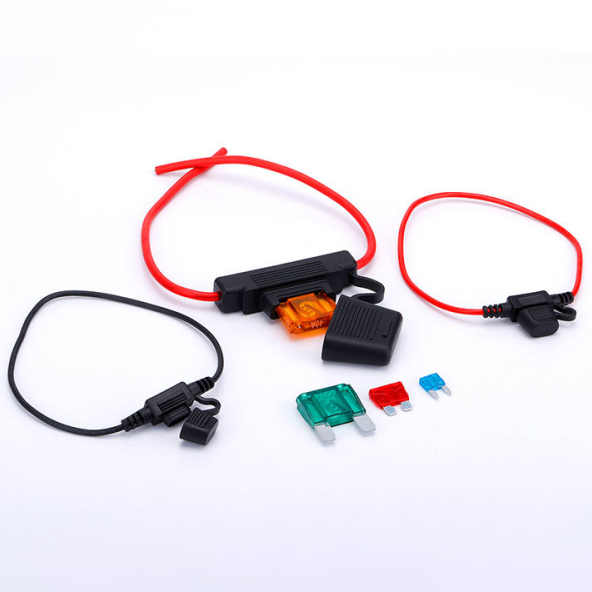
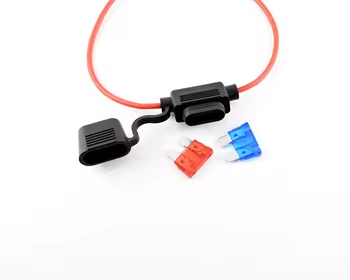
Fuse holders come in a few common forms. In-line blade holders (for ATO/ATC or mini blade fuses) sit in the middle of a wire run and are the most common on boats and RVs. Panel-mount holders screw into a dash or console and keep the fuse reachable. Terminal fuse blocks mount near the battery and handle high current. For wet locations, use a waterproof in-line holder with a sealed cover — typically rated IP67, dust-tight and protected against temporary immersion — with tin-plated contacts for corrosion resistance. LittelfuseMouser Thailand Check the fuse style your holder accepts: an ATO blade fuse is wider than a mini blade fuse, and they are not interchangeable.
The replacement, step by step
Disconnect the power. Remove the negative battery terminal first, or switch off the battery disconnect switch, then confirm the circuit is dead with a test lamp or multimeter before touching anything.DISSMANNAliExpress
Find the cause. A fuse that blows once may be a surge; a fuse that blows twice is a fault. Inspect the wiring for chafing, a shorted device, or a hot contact before you replace anything.
Match the rating. Read the number on the fuse body — 5A, 10A, 15A — and install exactly the same type and rating. Never install a bigger fuse to stop it blowing: the fuse protects the wire, not your convenience.BestBoatingIntegrated Publishing, Inc.
Remove the old holder. Cut the wires a short distance from the old holder to reach clean, corrosion-free copper. Strip the insulation with a proper stripper, not a knife.
Terminate the new holder. Use tinned marine wire and crimp-on connectors sized to the wire; a good crimp grips every strand. Cover each joint with adhesive-lined heat shrink. Loose or corroded joints are the number one cause of holder failure.
Install the fuse and test. Insert the new fuse, reconnect power, and confirm the circuit works and the holder stays cool under load.
Myths worth busting
Myth one: a bigger fuse is safer. Wrong — the fuse is sized to protect the wire. Oversizing turns the fuse into a decorative part and the wire into a fuse. Myth two: twist and tape is fine. Twisted splices loosen with vibration and corrode in salt air; use proper terminals and heat shrink. Myth three: waterproof means sealed forever. An IP67 holder survives immersion, but only if the cover is closed and the gasket is intact; a cracked cover invites corrosion. Myth four: soldering is always better than crimping. A poor solder joint can wick into the strands and crack under vibration; a correctly crimped, sealed joint is often more durable in marine service.
Marine notes
Where the holder lives matters. Bilges and engine rooms need heat- and moisture-resistant holders. Exposed decks need IP67 with sealed covers. Near the battery, use a holder rated for continuous current and check the terminal torque. And remember the first rule of marine wiring: match the wire gauge to the circuit load, and the fuse to the wire.
Care
During every service, inspect holders for discolored contacts, melted plastic or corrosion around the terminals. Clean contact points, re-crimp any loose connections, and replace cracked covers at once. A holder that runs warm after a fresh fuse is a fault, not a coincidence.
The best fuse holder replacement is the one done deliberately: power off, cause found, rating matched, connections sealed. Fuses are cheap; the circuit they protect is not. Whether you are fixing one console or building a harness for a fleet, treat every holder as the safety component it is.